
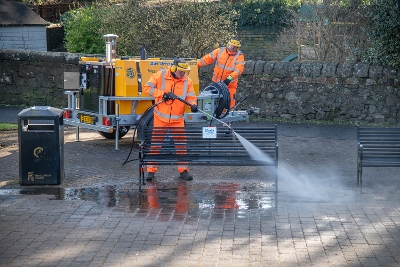
Council Executive have backed the adoption of new Service Standards within its Cleaner Communities Team, as well as a new Litter Prevention Action Plan (LPAP) for 2026/27.
The standards set out how the council will work to tackle environmental issues such as littering, fly tipping, graffiti, dog fouling and more, through a combination of education, enhanced infrastructure, community engagement and more stringent enforcement.
The area has already seen an improvement in performance in the independent litter audits from Keep Scotland Beautiful, increasing to 90.2% in January 2026.
The introduction of new service standards for both proactive and responsive work, appointment of an external contractor and modernisation of the Urban Clean Team is expected to lead to further progress in the future.
Executive councillor for the environment and sustainability Tom Conn said: "I welcome this new focus on West Lothian's environment, which takes a holistic approach to try and tackle the challenges.
"By using a mix of education, improving infrastructure, engaging with our communities and carrying out strict enforcement, we hope to continue to see improvements in the environment we all share.
"It's not acceptable that the council continues spend £2.9 million every year to tackle issues like litter or fly tipping, along with the volunteers like West Lothian Litter Pickers who give up their free time, all to address something that simply shouldn't happen in the first place.
"We all need to take pride in our fantastic local environment, and do all we can to discourage the selfish minority who choose to litter or fly tip."
The Litter Prevention Action Plan (LPAP) for 2026/27 contained within the new standards builds upon actions taken by the Cleaner Communities Team over the last two years to tackle littering and fly tipping.
Campaigns such as the Don't Waste West Lothian, and the Annual Spring Clean in addition to a modernisation of resources such as the dedicated Urban Clean (Glutton) street cleansing teams and mobile CCTV camera to deter fly tipping are all intended to contribute to marked improvements.
Strong partnership working with community litter picking groups, such as West Lothian Litter Pickers, has also helped deliver improvements and the Service Standards aim to provide a means to strengthen support.
Research shows the majority of litter is caused by individuals who have made the decision not to dispose of their waste responsibly, leaving it for others to clear up. Road side litter is also an issue, with a significant volume of litter thoughtlessly discarded from vehicles.
There is a legal obligation on local authorities and other land owners/occupiers to clear litter where practicable.


